Interview with Takayoshi Sato (Core Gamers)Date published: 2009.05.15
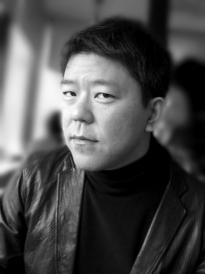
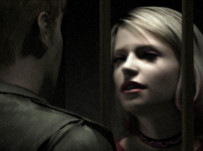
In the beginning, videogames were the ingenious projects of a few electronics engineers who ushered in a new era of game playing with the use of analog and digital technology. It would take more than a decade until the market could observe the coming of new and far more inventive experiences, emanating not only from the minds of the program code wizards, but from artists, designers and musicians – people with knowledge and prescience to make videogames evolve towards the genesis of a new medium. Joining forces with Konami in 1996, shortly after graduating from the Tama Art University of Tokyo, Takayoshi Sato belongs to this new generation of videogame artists that have been exploring different fields in the process of design. In spite of the recognition and awards received for his groundbreaking work in SILENT HILL, singlehandedly creating all pre-rendered sequences, Sato’s reputation as a luminary increased with the release of Fun TV’s short Making-Of documentary, included as a bonus in the European release of SILENT HILL 2. Expressing a wisdom rarely heard from a videogame maker, his profound vision made clear who had the most influence in the final result: a superlative example of the complexity and depth videogames can present. The relevance of Sato’s contribution to SILENT HILL is often understated: using his knowledge of 3D rendering software tools, which he acquired mostly by himself during his free time, he sculpted the characters that played that exceptional drama on the stage of an interior North-American town. By rendering each facial expression with details thought to be impossible in its day, he was able to gather a series of intense and ambiguous emotions that amplified the unsettling nature of the game. As a consequence of his work in the first episode, Sato gained more influence in the creative process of SILENT HILL 2, provided with better tools for CGI rendering but also the possibility to determine the general look of the game and selected portions of the game’s script - some of the main elements making this sequel the paradigm of a genre known to the mass media as "survival horror". Because of divergences with Konami, Sato left his country in search for new career opportunities in the United States of America where he worked for Electronic Arts at first, creating contents for the game GOLDENEYE: ROGUE AGENT, and then joining Virtual Heroes - the company where he currently holds the position of Art Director. Helping in the creation of a new emerging concept of “serious games”, where realism and detail are essential concerns, Takayoshi Sato has been able to further refine his already impressive technique, as can be seen from his latest work. It was my pleasure to interview Mr. Sato, addressing him some of the questions I longed to ask. He is a pioneer of the videogame art, in spite of the lack of general recognition for that feat, and one of the illustrious minds behind SILENT HILL 2, a game with the rare depth and artistic integrity the industry often seems deprived of. I hereby thank him for all the time he could spare for the completion of this article. COREGAMERS: When I think of Konami, I immediately remember the old logo and jingle as symbol of some of the greatest moments from my childhood. As an ex employee of this group, you must have a completely different notion of the company. Please explain me how you became part of the studios and how the working environment back there was. Which memories are stronger today? Takayoshi SATO: Konami’s short-wave logo is the eternal Konami logo for me, too. I like it more than the current. When I was approaching the final year of University, Konami was hunting for talent in our University. That was also about the time when 3D graphics were emerging – from Jurassic Park to VIRTUA FIGHTER. I was very interested in it. Although going to work for a game company (even getting a job) was not very popular choice among fine art students, I replied Konami’s contact form. There were three art tests and 5 interviews. That was long enough to discourage me from applying for any other companies. The environment in Japanese company may look tougher at the first glance, but the fact that it is warmer than it looks. Most of people work for single company for their entire life so the environment works pretty much like family. Parents scold kids, brothers and sisters fight, but they never really cut off each other completely. After all, they are families, for good or for bad. Now I think it is becoming westernized little by little. Also Konami is a creator-oriented company. A developer has more power than any department, which worked great for me. I got chances to create things. It would not go this way if it is marketing-oriented company, we might have needed to deal with huge load of marketing requests. Stronger memories? Maybe the time I received awards? My whole 7.5 years experience in Konami was quite a ride. All memories are still vivid. CG: 2. In your first project as a videogame as an Artist/Animator, you were asked to create abstract characters that would befit the idiosyncratic atmosphere of the PARODIUS series. On the other hand, in later works such as SILENT HILL you were asked to create human-like characters. Now a Human being is a complex entity that is composed of more than just a body, each with a unique personality, expression and mannerisms. What are the greatest challenges you face when transposing the human dimension into the digital world? SATO: I was Artist/Animator for SEXY PARODIUS. The PARODIUS universe had been already established in the previous titles: I simply followed the provided Anime style. SILENT HILL is much closer to my native art style. I did use my artistic license to establish look and feel. I have my background in oil painting, so I use the traditional artist’s approach to discover many dimension of the motif first. That was very natural process for me. I just needed to believe my judgment. I do not remember huge challenges except tons of technical challenges. However, I put extra care to create signatures for each character: for example, the signature for Dahlia is a withered neck that streaks of slacking skin goes from clavicle to jaw (that was very difficult to do at that time by the way) and that kind of things. Also, another challenge was that even though all characters are Caucasians, I really had no Caucasians around me as a reference - I had hard time to presume skull shape. Japan is almost single racial nation. CG: There seems to be a great deal of mystery concerning your role in the two games: for the record, you’re only credited as ‘character design/ CG Creation' for SILENT HILL and SATOWORKS is credited for CGI cinematic and Character design for SILENT HILL 2, though your efforts to the completion seem to go far beyond that. Please elucidate me (and all the readers) as to the nature of your work in both games. SATO: I did character design and made all cinematic CGI singlehandedly (from modeling through rendering). And I established most of the look throughout the game by doing so. As for SH2, I did character design and directed all cinematic CGI. Also I created story and directed storytelling related aspects. The game credited SATOWORKS for all cinematics. Even though I was in charge of SATOWORKS, and because they did not credit explicitly me as CGI director, which is also the Japanese way, there were some misunderstandings. CG: As a CGI expert and art director, your work is based on creating high quality graphics and animations that end up being transformed into high resolution movies – essential in SILENT HILL as storytelling mechanisms. In spite of that, the use of CGI today is an expensive alternative to the use of real-time animation. Have you ever felt, as a CGI director, that by creating new visual layers to the game – providing a contrast to the less detailed graphics of the in-game experience – you were somehow depriving the work of its homogeneity? SATO: Current generation games do not need pre-rendered movies. It rather distracts its immersiveness. Real-time rendering was so poor back then, pre-rendered movie was essential to help players to feel the game universe. CG: The first two SH episodes are still very dearly remembered by many who have not forgotten the important role played by the series in the evolution of videogames. With its complex narrative, both games provided unique insights on a desolate town, not unlike so many others across the interior North-America. To those played the games through, the name Silent Hill acquired an intricate and ambiguous significance: as a powerful and mind-bending metaphor, what does it mean to you? SATO: I made it so that the look of the town touches audiences in a deeper level. So it might be connected to my nostalgic memories, but I am not really sure. I tried to depict a town that is desolated, filled with sorrow yet you cannot stop loving it. Here is back story of the town. I filled many logical holes we had in SH1. The place Silent Hill is used to be the place of execution, away from cities. That was secret and sacred place. Heinous criminals are transferred to that place and get executed. That place existed only for that reason. Thus all village people are executioners or family of executioners. Executioners needed to wear a mask at the event so they do not directly witness their spear when it was piercing flesh. Time have past, only memory of execution lingered, got enhanced and formed the roaming illusion of Silent Hill. Pyramid head is distorted memory of the executioners. CG: In spite of the terrifying creatures lurking in the unsettling, abandoned town, it is the human element that ends up inspiring the feeling of fear in the SILENT HILL games: the disturbed mental conditions, the bizarre facial expressions and aberrant behavior they often display. In your opinion, what is most frightening about the nature of the Human being? SATO: I do not think human would feel fear by seeing monster with fangs, horns and such typical scary visual language. I think there are two main factors that evoke fear: first, to see something beyond their understanding; second, to see concealed their true-self. I think same rule applies no matter what kind of creatures, environment you use. The concept seem enough reflected in the world of SILENT HILL. CG: A shift between episodes occurred as the team suffered some changes. The original game director, Toyama-San, left Konami in order to work in his own new depiction of terror, in a game that deals with traditional Japanese concepts of fear and paranormal. Your game, however, was more in tune with western horror themes, namely the ones explored in visual arts – like the work of Francis Bacon – literature and cinema. As someone who had such an important participation in the creative process (scriptwriting, art direction, etc) can you name some of the reasons behind the choice of these particular themes and inspirations? SATO: We really did not like anything too obvious. We deliberately avoided shallow illustrative monsters or atmosphere. We carefully chose the inspirations rather ambiguous and chaotic, or the very twisted art generated by twisted mind. CG: I assume that SH2 was your first attempt at writing a script for a videogame. How does one actually write a script for an interactive videogame? Do you still remember what parts of the story you were most involved with? SATO: Script writing is very fun. To manipulate player’s emotion, how much you can betray player’s expectations and such. There are two parts I really put my brain together. One is the confusion between Maria and Mary. Maria is cleverly dodging James’s question and riddles him into the confusion. Maria: James, honey, did something happen to you? After we got separated that long hallway? Are you confusing me with someone else? You were always so forgetful, Remember that time in the hotel? You said you took everything but you forgot the video tape we made. I wonder it is still there. James: How do you know about that? Aren’t you Maria? Maria: I am not your Mary. James: So you are Maria. Maria: I am, if you want me to be. James: All I want from you is an answer! Maria: It doesn’t matter who I am. I am here for you James. See? I’m real. The second is Laura. Contrary to the standard, I did not portray her little angel but little cunning tyke. She is like making fun of you when her father is around but changes her attitude quickly into sweat girl as soon as her guardian disappeared. James: It was you? Stepped on my hand? Laura: I don’t know maybe I did. James: What’s little girl like you doing here anyway? Laura: Huh? Are you blind or something? CG: I notice there is a great difference between leading characters in both games, from Harry to James: they both appear to be vague, empty characters that consent to enter a hellish journey in order to fulfill a very strong motivation. Harry is a simple person under abnormal events he cannot fathom – he ended up in the town apparently by accident and remains there in search for his treasured daughter. But James’ apparent shallowness is increasingly replaced with complexity as the player realizes the nature of his true self and his past choices, the reason why he deliberately goes to the town. Would you agree with this statement? (Why) was there such a great change? SATO: I agree. The player in game in most cases is you. Whether Harry or James. In SH2, storytelling technique is more elaborate and let the player share the past memory that James has had, instead of just giving the player situation and objectives, which was pretty much how SH1 was. CG: Let’s talk a little about Mary and Maria. This is clearly a point of the game that is meant to perplex the player: what is the source of this unique duality? SATO: The Mary/Maria paradox was one of my experiments weaving Eros and Thanatos into the main story line. I think I have tendency to pursue that kind of delineation. That turned out there are similar sexual quality of line of casts. CG: While the two SH games where you participated were led by male characters, the most complex and impressive personas from the two games are mostly female characters: Cheryl, Dahlia, Lisa and Alessa in the first game; Mary, Maria and Angela in the second game. What do you find so fascinating and inspiring about the unique personality and physicality of women? SATO: Regular adult male is most commonly used as main character throughout the media. It is easy way to have logical narrator. In that formula, naturally females are focus of interest. And I think rather majority of people, not only men want to see a female character in focus. CG: You are by trade a creative artist whose work is no different from the commonly recognized visual artist: you conceive and create based upon your own imagination and deep thinking. The industry of videogames has not yet been classified, consensually, as an art expression medium. To what extent does this issue affect your work and the recognition of your professional status? SATO: SILENT HILL 1 and 2 were a very special case. Because its structure was loose and organic, I was able to seize an opportunity. However, in most cases Art Director is not fully authorized to make all decision for even visual art. Always there are producers or clients hold authority. That is the reality. It’s very hard to put force your own vision into final product unless you are total in charge. I have sizzling ideas that I would like to realize when I am fully in charge and I will not let it be just a fantasy. CG: Your work in SILENT HILL was widely recognized, earning you some important awards as well as critic and public recognition. But there seems to have been some confusion as to the real circumstances under which you and SATOWORKS were labeled as an “unprofitable” group by Konami Computer Entertainment. Because you were such a valuable asset to this team, why did they let you go? SATO: First of all, they did not let me go. There were some misunderstandings in another interview because I did not explain in the details. But here is what really happened. SATOWORKS started as cinematic/CGI studio and its ultimate goal is to ramp it up to a stable game studio in US. I got enough of budget for SH2 before it started but there were no contract papers. I was approached by executives when SH2 work was being created; they were saying “this is the money as promised”. But the amount was the half of it was promised. So even though the project went very profitable, it was written in red ink. It is rather popular not having contract paper within the same company in Japan and I was aware of its risk. But because SATOWORKS directly reported to Japanese headquarters, we needed to follow the Japanese rule. I found it very difficult following this rule when I was still working in the US office. So I left Konami. CG: Before you left, it seems as if you were already drafting a script for SILENT HILL 3: a story that, I believe, was very different from the one that ended up being used for the actual game. Can you let me in on what direction you were headed? SATO: What I was thinking was similar genre, different game. I think I better keep it secret. Who knows there may be a chance to realize the idea some day? CG: It has been quite a while since you left Konami and from what I can see in your website and in recent interviews, you remain as active as ever, working in different and exciting projects. But somehow, your work in SH has become the reference for your professional career, the one most people remember and respect. Do you share this opinion – what is the work you feel most proud of? SATO: I still think that SILENT HILL 1 and 2 represent the best of my work. They have my largest influence. I can do much better now, though. CG: I’ve often wondered about two aspects of the SH games you worked on. First, who came up with the idea to include a UFO ending? - always sounded like a private joke from the team. Secondly, why is it that every time the face of the actor who voiced James Sunderland appears it is blurry and indistinguishable? SATO: Yes, that was a private joke. We thought that this was kind of a tradition that we need to keep: breaking serious mood at the end, the bonus for only who beat the game many times. It’s like NG shots or bonus costume. We had wiki idea boxes where everybody could pitch their ideas in. There was a box labeled ”Why did SH go into such a mess?”. There were funny ideas pitched such as: - Alien’s conspiracy Stuff like that, so we picked the funniest. I did not notice the actor face was blurred. The actor may have had personal agenda. CG: For more than ten years, you have been a powerful creative force inside and outside the videogame medium. What do you think future holds in stock for you? Do you have any projects you would personally like to participate in? SATO: I am searching for it. It’s not going to be any existing title or genre. After all, I came here to serious games in search of new creations. There can be different possibilities that entertainment game genre has already lost. SH was a great benchmark at that time, but I do not want to recreate another episode of the game. It needs to be a new challenge. I am searching for a chance that allows me to seize a new creation: a superior experience in a new style. |