
Interview with Akihiro Imamura (Dengeki)
The fog descends once again upon that town…
Producer Akihiro Imamura' discusses the appeal of Silent Hill 2.
Date published: 2001.10
Source: Dengeki
Note: Machine translation
The horror adventure game “Silent Hill” was a hit, selling over 1.5 million copies in Japan and overseas. Its sequel, Silent Hill 2, has finally been released. To commemorate the launch, we asked Akihiro Imamura, the producer of Silent Hill 2, to share the behind-the-scenes stories of its development. Reading this should give you an even deeper appreciation for the game’s appeal.
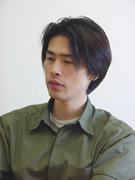
Akihiro Imamura |
Mr. Imamura’s Connection to Silent Hill
Silent Hill 2 has finally been released. This is your first project as a producer—how did you find the role?
Imamura: It was tough (laughs). At first, I was asked if I’d like to be the director, and I accepted, but as production progressed, the number of people involved just kept growing.
Roughly how many people were involved?
Imamura: For the previous title, the final staff count was around 15, but this time it was about 50.
So that’s roughly more than three times as many.
Imamura: Yes. That’s why, partway through production, we decided to split the roles into two: someone to oversee the game’s content and someone to oversee the project as a whole. So, we had Mr. Tsuboyama (*1), who had been mainly in charge of visuals, take on the role of director to oversee the game’s content, while I took on the role of producer to oversee the entire project.
By the way, what was your role on the first Silent Hill?
Imamura: For the first game, I was the lead programmer. But I wasn’t just a programmer—I was involved from the very beginning of the project’s planning.
So, did you come up with the concept for Silent Hill?
Imamura: Not exactly. The concept was actually devised by someone else who loved horror, but the planning itself was carried out by a team of several people. I was simply one of the members of that team.
Did you personally like horror, Mr. Imamura?
Imamura: Horror wasn’t really a genre I was that interested in. But since we were developing the project, I studied by reading novels and watching movies. In the case of Silent Hill, the horror elements are the strongest, but there are other elements as well, so I didn’t limit myself to just horror—I explored various genres, like absurdist films and suspense. From that point on, I started to take an interest in it—or rather, I began to enjoy it.
So, does that mean you didn’t touch the programming at all for this project?
Imamura: At first, I intended to do the programming myself, but in the end, I couldn’t (laughs). I spent a lot of time having individual meetings with all sorts of people—the CG artists, the people working on the drama segments, and so on.
As a former programmer, did you feel a little left out? (laughs)
Imamura: When I think about it that way, I actually felt more directly involved in the project when I was the lead programmer. Being a producer is a really tough job. That said, this time Director Tsuboyama handled the art direction for me, which was a huge help.
The user-friendly configuration options that make the game accessible to anyone are worth noting!
How long did it take to develop SH2?
Imamura: Counting from the project’s launch, it was a little over two years. There are always twists and turns when developing a game. There were a few times when we were forced to make major decisions.
What kind of decisions did you have to make? I’m really curious about that…
Imamura: Well, let’s just say everything worked out for the best. But the game’s world-building remained unwavering.
What do you mean by that?
Imamura: I’m referring to the exquisite “analog” feel of Silent Hill. When I started working on SH2, I didn’t want to disrupt that subtle analog atmosphere—you know, the sense that while there’s a VCR, there are no cell phones or CDs.
That’s true; when you play the game, even though the story is different, it doesn’t feel out of place at all compared to the previous title. By the way, this time the story and other elements focus more on the human side, right? I feel like the previous title, if anything, emphasized the occult aspects more.
Imamura: With this title, our goal was to move away from the occult in terms of the story’s direction. We wanted to portray fear using an approach different from the occult. When I thought about that, I figured it would be scary if we delved into the human psyche and depicted the madness and fear lurking there. That’s why it took the form it did this time.
If that was the policy for the game’s world-building, what was the policy regarding the game system?
Imamura: This goes back to the previous game, but I’ve always felt that I didn’t want to display things like HP gauges or other “game-like” elements on the main screen. This is purely a personal preference of mine, though.
That’s true; gauges aren’t displayed on a typical game screen, are they?
Imamura: I think the sense of immersion and dynamism you get from the screen is completely different depending on whether or not there are gauges. Plus, since we’re putting so much effort into capturing the atmosphere of the town of Silent Hill, I didn’t want to ruin that atmosphere with little details like that.
The controller vibration is great, isn’t it? Since there are no HP gauges or anything like that on screen, there was that heart-pounding tension of not knowing when you’d get a Game Over.
Imamura: Exactly. We consolidated all the “game-like” elements, such as health gauges, into the status screen. To minimize their impact on the main screen while still making them easy to understand—such as when your health is decreasing—we employed various techniques, including using the controller’s vibration.
Also, what really struck me about this game is how user-friendly the configuration—or rather, the options—are. I imagine you paid close attention to that as well.
Imamura: Yes. Unfortunately, even we can’t help players who get too scared to continue, but we really hated it when players couldn’t progress because the action or puzzles were too difficult.
“I can’t play because it’s too scary”—that’s one situation we really can’t help with, that’s for sure (laughs).
Imamura: Also, we wanted people who might be hesitant to try this kind of game because it looks difficult to give it a shot. So, we made it possible to choose from four difficulty levels for action—Beginner, Easy, Normal, and Hard—and three for puzzles—Easy, Normal, and Hard. With the “Beginner” setting, even people who aren’t good at action games should be able to play without getting a Game Over. As for the puzzles, just because they’re set to “Easy” doesn’t mean they’re nonexistent—we’ve designed them so players can enjoy the game without having to rack their brains too much.
It’s surprising to learn that there are different difficulty levels even for the puzzles. I’m sure existing games don’t have this kind of feature, do they?
Imamura: We’ve also made it possible to choose between two control schemes: a 3D style (where pressing the up arrow key moves you forward, down moves you backward, and left and right make you turn—the so-called remote-control style) and a 2D style where you control the character exactly as shown on the screen. In short, we’ve designed the game to accommodate a variety of play styles.
Things We Can Finally Talk About Regarding Silent HillNow That It’s Been Released
Now that the game’s out, we can finally talk about it! Please share some behind-the-scenes development stories!
Imamura: Hmm. Well, let’s talk about the Beginner Mode in the action section. During development, we actually called it “Honey Mode.” But after giving it some thought, we decided against that.
“Honey,” huh? That’s interesting. Wouldn’t it have been fine to just keep it? (laughs)
Imamura: Also, there are four different endings, but they aren’t your typical “Good” or “Bad” endings. It’s more like whether you view the story from the surface or from the deeper layers. So, if you see all four endings, you won’t have a perfect picture of the whole story, but I think you’ll get the gist of it.
That’s deep.
Imamura: And one more thing. The staff added this as a bit of fun: there’s a room in the history museum where staff photos are displayed. If you get close to the wall and look up using Search View, you should be able to find them. There are other little Easter eggs like that as well, so please try to find them.
It sounds like there are plenty of fun things to discover if you check out all sorts of places.
Imamura: Combat is certainly one of the highlights, but above all, I really want players to enjoy the story. The theme we’re expressing this time is “love,” so I hope you’ll be able to feel that. Also, we put a lot of effort into details like the expressions of the characters in the cutscenes that appear throughout the game and the pauses in their dialogue, so I’d be happy if you played while paying close attention to those elements.
What’s Next for “Silent Hill,” and What About the Much-Anticipated Xbox Version?
Finally, I’d like to ask about the future of Silent Hill. First, please tell us about the Xbox version. I believe you referred to it as the “Complete Edition” during the Xbox press conference.
Imamura: First, I’d like to clarify that when we say the Xbox version is the “Complete Edition,” it doesn’t mean the PS2 version was incomplete or that the story truly concludes with the Xbox version. Rather, it means we’re not simply porting the PS2 version—we’re creating a title that fully leverages the Xbox’s capabilities. I can’t go into details yet, but we’ve included elements unique to the Xbox that aren’t in the PS2 version, so I think even those who played the PS2 version will enjoy it.
What about a port to the recently released GameCube?
Imamura: We’re not considering that at the moment. Nintendo’s hardware is inevitably targeted at a younger audience, so I feel the target age range is a bit too far off. The story of Silent Hill is on the more complex side, so I don’t think children would be able to understand it. For that reason, we’re not considering it for now.
What about expansions beyond the game itself? Popular examples include novel adaptations. Recently, there have been action figures as well, haven’t there?
Imamura: That’s true. As creators, we want to cherish that world, so we’re hesitant to expand it too much. However, we are considering various possibilities for expansions—such as setting details—as long as they don’t disrupt the game’s world-building. I’m not sure about action figures specifically, but I think we might see some character merchandise appear in the future.
As Mr. Imamura mentioned, I think it’s incredibly difficult to make a game accommodate a wide variety of playstyles. However, it’s fair to say this game took on that challenge and succeeded. In fact, it’s rare to find a game with such user-friendly options and difficulty settings, and that’s what makes it accessible to so many people (in fact, even people who usually struggle with this kind of game were able to beat Silent Hill 2). Furthermore, the facial expressions and pauses in dialogue—which Mr. Imamura specifically mentioned he wanted players to pay attention to—add a compelling depth to the story and are truly wonderful. Typically, with horror visual novels, the sense of fear tends to fade with each installment, but this series avoids that pitfall. Having actually played it myself, I found it even scarier than the previous title, even though the basic presentation style remained the same. While the realistic graphics certainly play a part, I believe it’s ultimately because the game’s theme and narrative direction are so solid. Setting aside those who aren’t fond of scary games, it would be a tremendous waste to skip this title simply because horror visual novels are considered difficult. This is definitely a game I highly recommend you try for yourself.
*1: Masashi Tsuboyama, a member of Production Division 1 at Konami Computer Entertainment Tokyo. He has been involved in the production of Silent Hill since the first installment, serving as the game director and chief background designer (commonly known as the art director).